
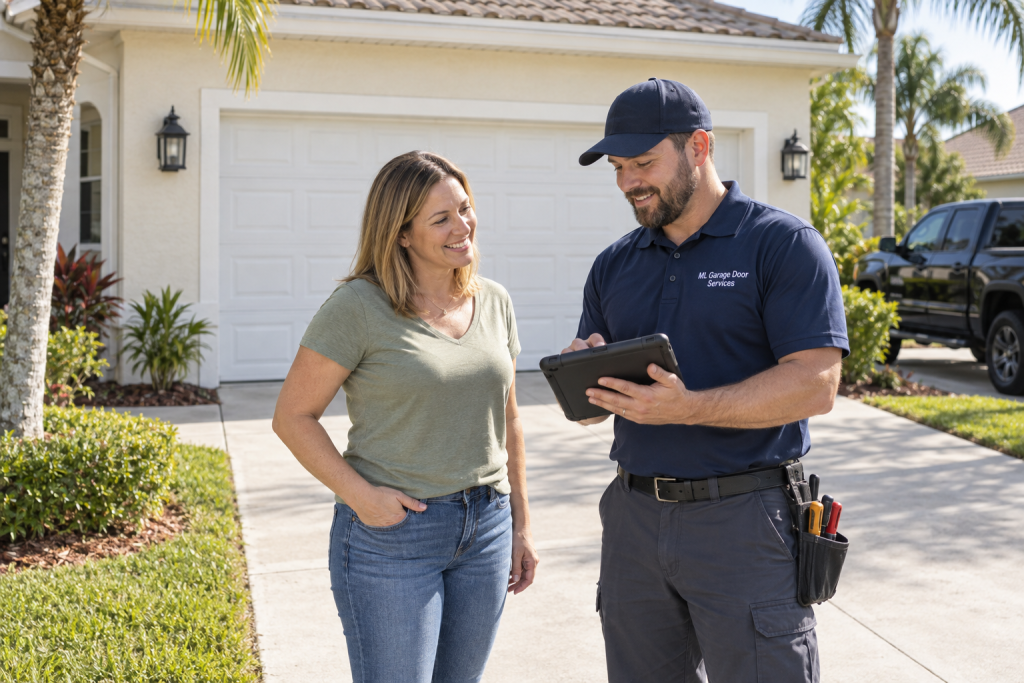
Garage door repair costs in Fort Myers depend on the cause of the problem, the parts required, and the work involved. A door that will not open or close needs an assessment before you can compare repair options accurately.
This guide explains common problems, what affects a repair estimate, and which questions to ask before approving work. Start with a clear diagnosis and written pricing.
Call ML Garage Door Services at (239) 788-7134 to discuss your garage door problem and request an inspection.
Common Garage Door Problems
Several components work together to move your door. Similar symptoms can have different causes, so replacing a part without checking the system may leave the original problem unresolved.
Broken or Worn Springs
Springs counterbalance the door’s weight. A broken spring can leave the door difficult to move and prevent normal operation.
Warning signs may include a loud bang, a visible gap in a torsion spring, or a door that stops shortly after opening. These symptoms need a professional assessment.
If you suspect a broken spring, stop operating the door. Do not disconnect an open door from its opener or attempt to adjust the spring hardware.
Frayed or Displaced Cables
Lift cables work with the spring system. Frayed strands, a cable hanging loose, or a door that rises unevenly can indicate a problem.
A displaced cable may be the result of another failure. A technician should check the cause before replacing or resetting it. Avoid touching cables, drums, or bottom brackets, which can be under tension.
Worn Rollers and Hinges
Grinding, rattling, and uneven movement can involve worn rollers or hinges. However, noise alone does not identify the part that needs replacement.
Ask your technician to inspect the hardware and explain any recommended changes. Replacement rollers should suit the door and track system.
Track Problems
A damaged or misaligned track can interfere with movement. You may notice scraping, binding, or a roller outside its normal position.
Stop using a crooked or off-track door. Do not try to force it closed or bend the track back into place.
Opener and Sensor Problems
A remote that does not respond or a door that refuses to close does not automatically mean the opener needs replacement.
LiftMaster identifies several possible causes, including remote batteries, sensor alignment, blocked travel paths, track problems, and broken springs. Its garage door opener repair guidance explains when further diagnosis is appropriate.
For persistent problems, request opener repair and installation service.
Damaged Weather Seals
Cracked, missing, or poorly fitting seals can leave gaps around the door. Ask whether a compatible replacement seal is available and whether the gap also involves the door’s alignment or the floor.
What Affects Garage Door Repair Costs?
A useful estimate should explain what failed, which parts need attention, and what the proposed repair includes.
Factors that can affect garage door repair costs include:
- The type and extent of the damage.
- The door’s size and hardware configuration.
- Availability of compatible replacement parts.
- Labor required to complete the work.
- Service-call or after-hours fees, where applicable.
- Warranty coverage for parts and labor.
An inspection helps distinguish an isolated problem from damage involving several components. Ask the technician to explain that distinction before approving work.
Questions to Ask Before Approving a Quote
Compare the scope of work as well as the total price. Two estimates may include different parts, labor, or warranty terms.
Ask these questions:
- What caused the problem?
- Which repairs are necessary now?
- Are any proposed upgrades optional?
- Does the total include applicable fees and taxes?
- What warranty covers the parts and labor?
- How will additional work be approved if more damage is found?
Keep a copy of the estimate and final invoice. These records help you track previous repairs and understand future recommendations.
Should You Repair or Replace the Door?
An isolated component failure does not always require a complete replacement. However, extensive damage or repeated problems may justify comparing both options.
Ask for separate written estimates identifying what each option includes. Consider the condition of the remaining components, availability of compatible parts, and warranty coverage.
Our guide to repairing or replacing a garage door in Fort Myers offers additional questions to help with that decision.
If replacement is appropriate, explore new garage door installation options. For work involving reinforcement or structural changes, ask who will confirm applicable permit and product requirements.
What Can Homeowners Check Between Visits?
Routine observation can help you notice changes without adjusting the door’s hardware.
With the door closed, look from a safe position for visible damage, gaps in weather seals, or unusual hardware positions. Keep stored items away from the door’s travel path and sensors.
Follow the maintenance schedule and testing instructions in your specific door and opener manuals. Contact and non-contact reversal checks are different tests; use the manufacturer’s exact procedure for each.
If a safety feature fails, stop using the opener and arrange service. Never bypass a sensor or increase force settings to overcome a door problem.
Lubrication also depends on the equipment. Avoid applying lubricant to every moving surface or tightening spring, cable, and track hardware yourself. Ask a technician which tasks are appropriate for your system.
You can schedule maintenance and tune-ups to review wear, operation, and recommended care.
When Should You Stop Using the Door?
Arrange professional service if the door is crooked, has a visibly damaged cable, has come off its tracks, or may have a broken spring.
Keep people and pets away from the opening. Avoid repeated attempts to run the opener or manually move an unstable door.
When booking, describe what happened, where the door stopped, and any visible damage. This information helps the service team understand the situation.
Request a Repair Estimate in Fort Myers
Understanding garage door repair costs starts with identifying the problem and reviewing a clear scope of work. Ask what the repair addresses and which warranty terms apply.
ML Garage Door Services provides garage door repair in Fort Myers, along with opener service and maintenance appointments.
Call (239) 788-7134 to describe your garage door problem and request a service appointment.