
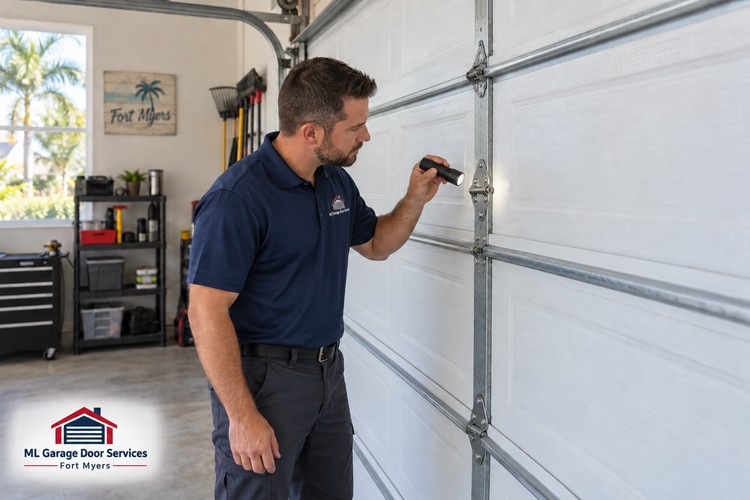
Noisy Garage Door in Fort Myers? Common Causes and Next Steps
A noisy garage door can make every arrival and departure disruptive. Squeaking, rattling, or grinding may point to different issues, so identifying the source matters before choosing a repair. If the noise is new, getting louder, or accompanied by uneven movement, arrange an inspection.
This guide helps Fort Myers homeowners understand common warning signs and when to request professional service. ML Garage Door Services is a family-owned company providing garage door repairs, opener service, and maintenance throughout Lee and Collier counties.
Call (239) 788-7134 to schedule an inspection. For an urgent operating problem, ask about our 24/7 emergency repair availability.
Understanding Why Garage Doors Make Noise
Your garage door is the largest moving part in your home and consists of several interconnected components: springs, tracks, rollers, hinges, cables, and the opener. When any one of these parts becomes worn or misaligned, it can generate noise.
Common reasons your garage door is making noise include:
- Loose hardware: Screws, bolts, and nuts that secure the tracks or opener components may loosen over time, causing rattling or vibrating sounds.
- Lack of lubrication: Dry metal parts rubbing against each other can create grinding or screeching noises.
- Worn-out rollers: Old metal or plastic rollers break down, wobble, or make squeaky sounds during operation.
- Misaligned tracks: If your tracks are bent or not properly aligned, your garage door may produce a grinding or scraping noise.
- Broken springs: Extension or torsion springs that are failing or broken can cause loud bangs or inconsistent lifting operation.
- Faulty opener chain or belt: A loose or damaged opener drive mechanism may slap or clang with each cycle.
According to the Door & Access Systems Manufacturers Association (DASMA), regular maintenance plays a key role in reducing noise and extending the life of your garage door. “Noises are often early indicators of mechanical wear that could lead to operational failure,” the association notes.
Different Noises and What They Mean
A noisy garage door doesn’t just mean your system is getting old—it often points to specific issues. Here’s what specific sounds usually indicate:
| Noise Type | Possible Cause | Recommended Fix |
|---|---|---|
| Squeaking or screeching | Dry rollers or hinges | Fix squeaky rollers with proper lubrication or replacement |
| Grinding or scraping | Misaligned track or bent metal parts | Realign or replace damaged tracks |
| Rattling or vibrating | Loose nuts, bolts, or brackets | Tighten all hardware using a socket wrench |
| Bang or loud pop | Broken torsion or extension spring | Stop usage and call a professional immediately |
| Slapping or dragging | Chain or belt is loose or misadjusted | Check and adjust opener system tension |
If you hear a grinding sound garage door issue, that could be especially problematic—it often means your opener motor is straining or your track is damaged. This noise shouldn’t be ignored, as prolonged operation could damage other connected parts.
How to Fix a Noisy Garage Door
Once you identify the type of noise and its likely cause, you can often fix it yourself—if the issue is minor. However, for more serious problems, like spring damage or opener failure, contacting a certified technician in Fort Myers is recommended.
Basic steps to quiet a noisy garage door include:
- Tighten all parts: Use a socket wrench to secure all brackets, hinges, and bolts along the tracks and door panels.
- Lubricate moving parts: Apply a high-quality garage door lubricant (not WD-40) to rollers, hinges, pulleys, and springs. Do this about twice a year for best results.
- Inspect and replace rollers: Metal and plastic rollers degrade over time. Consider switching to nylon rollers, which are quieter and require less maintenance.
- Check for worn hinges: Broken hinge joints can squeak or bind. Replace any that have visible damage or excessive movement.
- Balance and align the door: A door that is out of balance can rattle or bind. Disconnect the opener and lift the door manually; if it doesn’t stay in place, the springs may need adjustment by a professional.
Florida’s salt air and high humidity can accelerate wear on metal parts. That’s why it’s especially important in our area to perform maintenance multiple times a year. The City of Fort Myers recommends all moving exterior systems be inspected at least once every 6 months due to the coastal climate.
When to Call a Professional
Not all garage door fixes are safe to do yourself. Broken springs, motor issues, and major alignment problems can be hazardous if you’re not properly trained or equipped. The U.S. Consumer Product Safety Commission (CPSC) warns that garage doors are one of the top causes of home-related injuries, with over 20,000 incidents every year tied specifically to DIY repair attempts.
“If your garage door still makes noise after lubrication and basic adjustments, it’s time to bring in a professional to inspect worn or damaged components,” says Brian Kratz, a certified technician with over 15 years of experience in garage door systems.
Getting a garage door tune-up from a certified local technician ensures all moving parts are in good shape and safety features like sensors and cables are intact. If your noisy garage door in Fort Myers keeps giving you trouble, scheduling a tune-up could save you from more expensive repairs down the road. Many Fort Myers residents trust routine inspections to extend garage door lifespan and improve quiet operation.
To keep your door running smoothly and avoid excessive noise over time, it’s wise to fix squeaky rollers, lubricate properly, and tune up your system at least once or twice a year. If you’re ever unsure, give your trusted local technician a call—you’ll save time, money, and likely a few headaches too.